Launch offer — valid today only

📄 Digital book in PDF · read it on your phone or print it

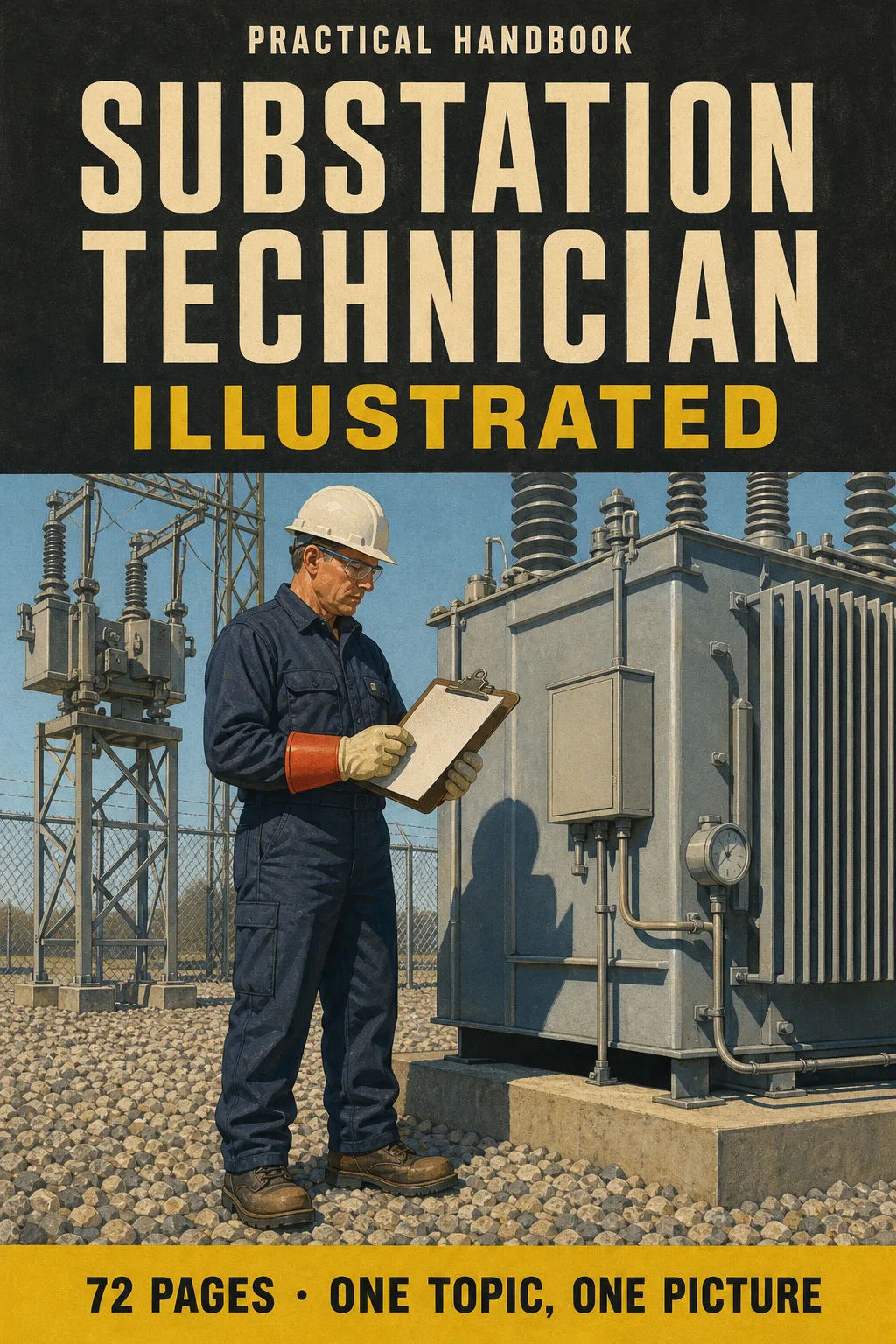
Substation Work in Drawings: Read the Yard and the One-Line the Same Way Every Time One Topic on Every Page

The yard layout, one-line diagrams, bus configurations, power transformers, tap changers, breakers and disconnects, CTs and relays, switching orders. Every topic gets its own page: the drawing first, then what you need to remember. 72 illustrated pages.

YES, I WANT THE SUBSTATION IN DRAWINGS

🔒 Secure checkout · PDF by email · 30-day guarantee

Every topic, its own pageEach piece of equipment drawn, with the explanation right beside it
72 illustrated pages9 parts, from who's qualified in the yard to the test-day checklist
Up-to-date sourcesOSHA 29 CFR 1910.269, NFPA 70E, the NESC and IEEE device numbers
PDF by emailFormat

Look Inside the Book

Every page has one big drawing and a box with the numbers, steps and device codes you need to know:

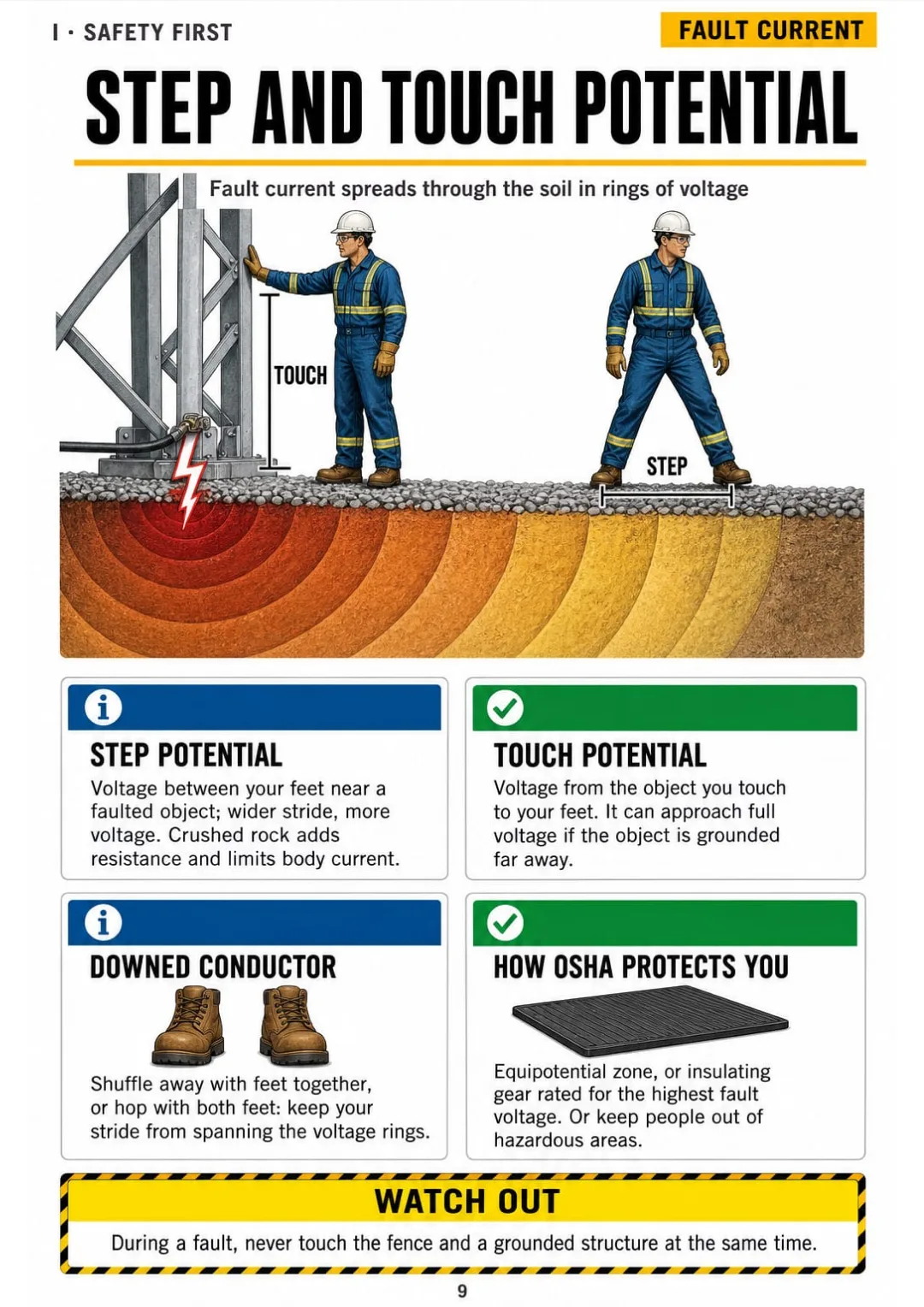
Step potential: between your feet. Touch potential: between your hand and your feet.
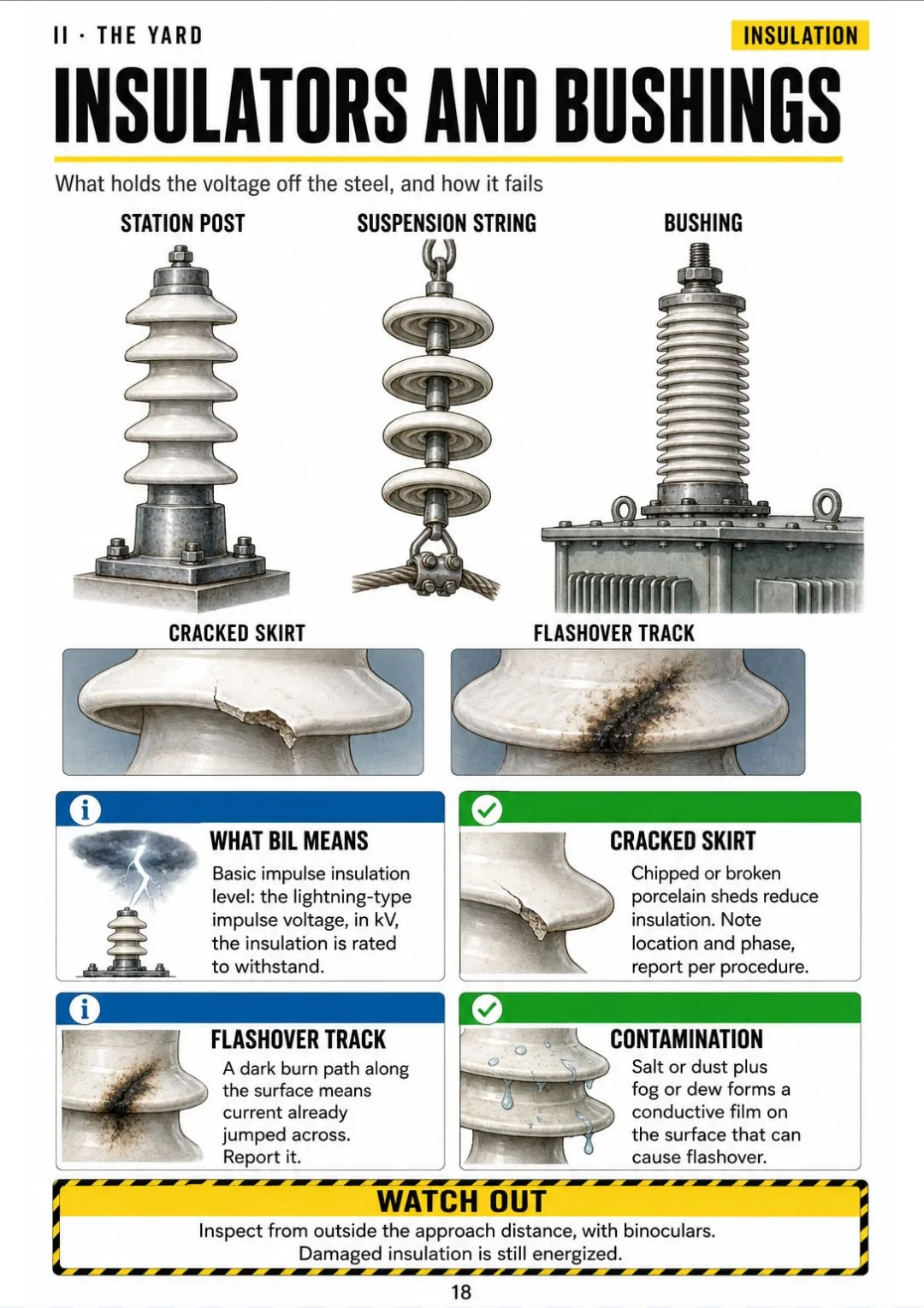
Station post, suspension string and bushing: BIL, cracked skirts, flashover tracks and contamination.
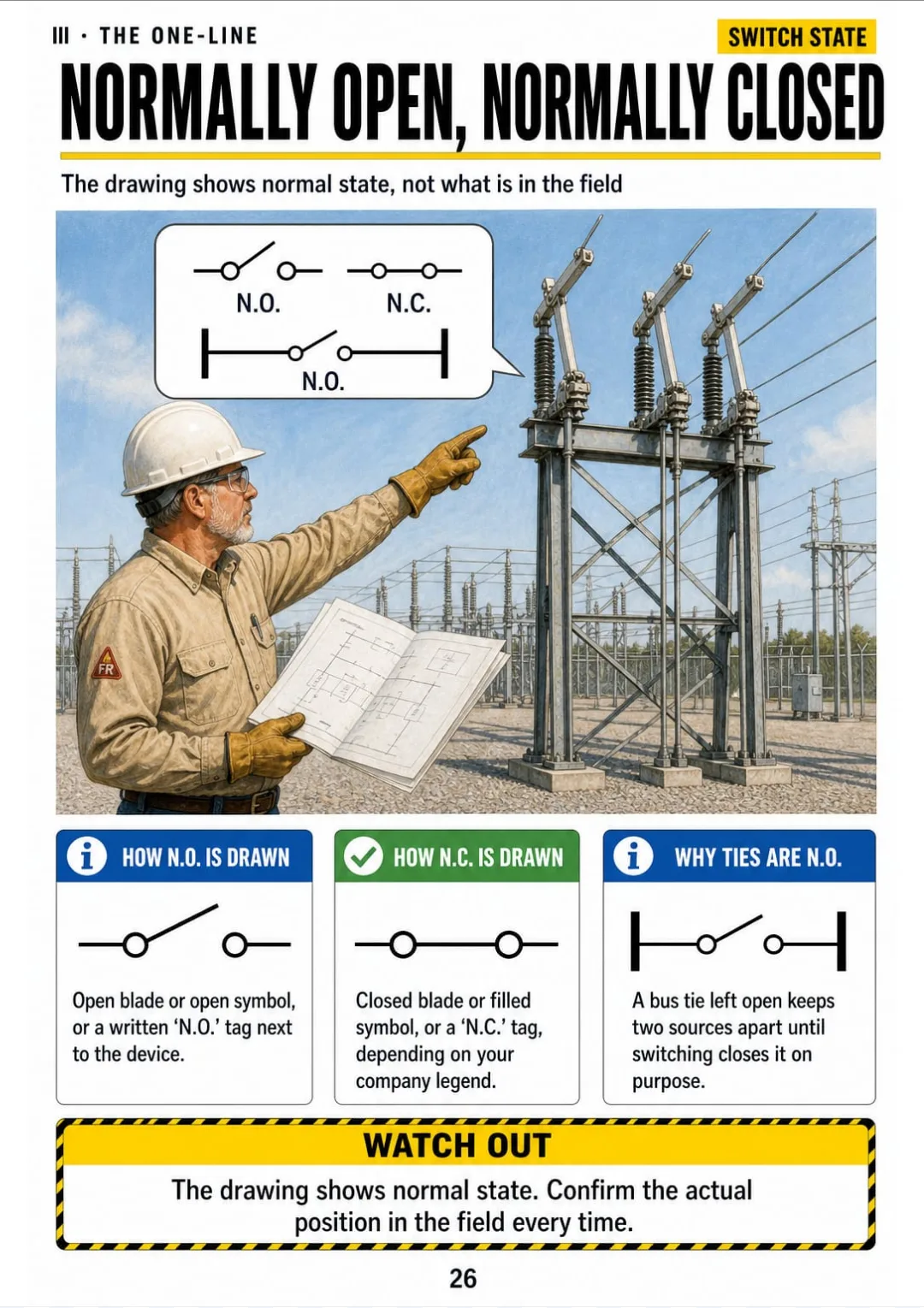
N.O. and N.C. on the one-line show normal state; tie switches stay open to keep sources apart.
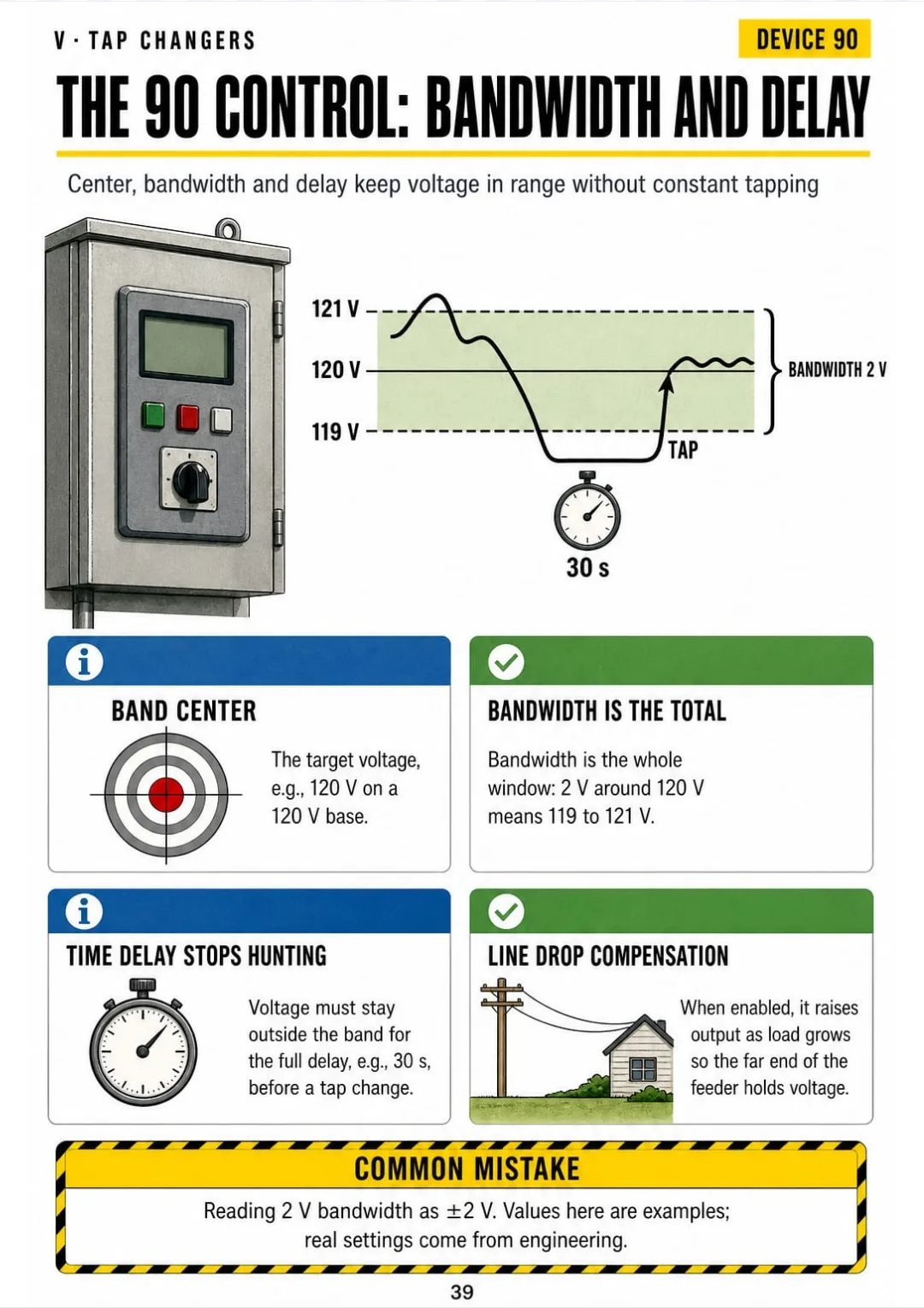
Device 90: band center, bandwidth (total window) and time delay so the tap changer doesn't hunt.
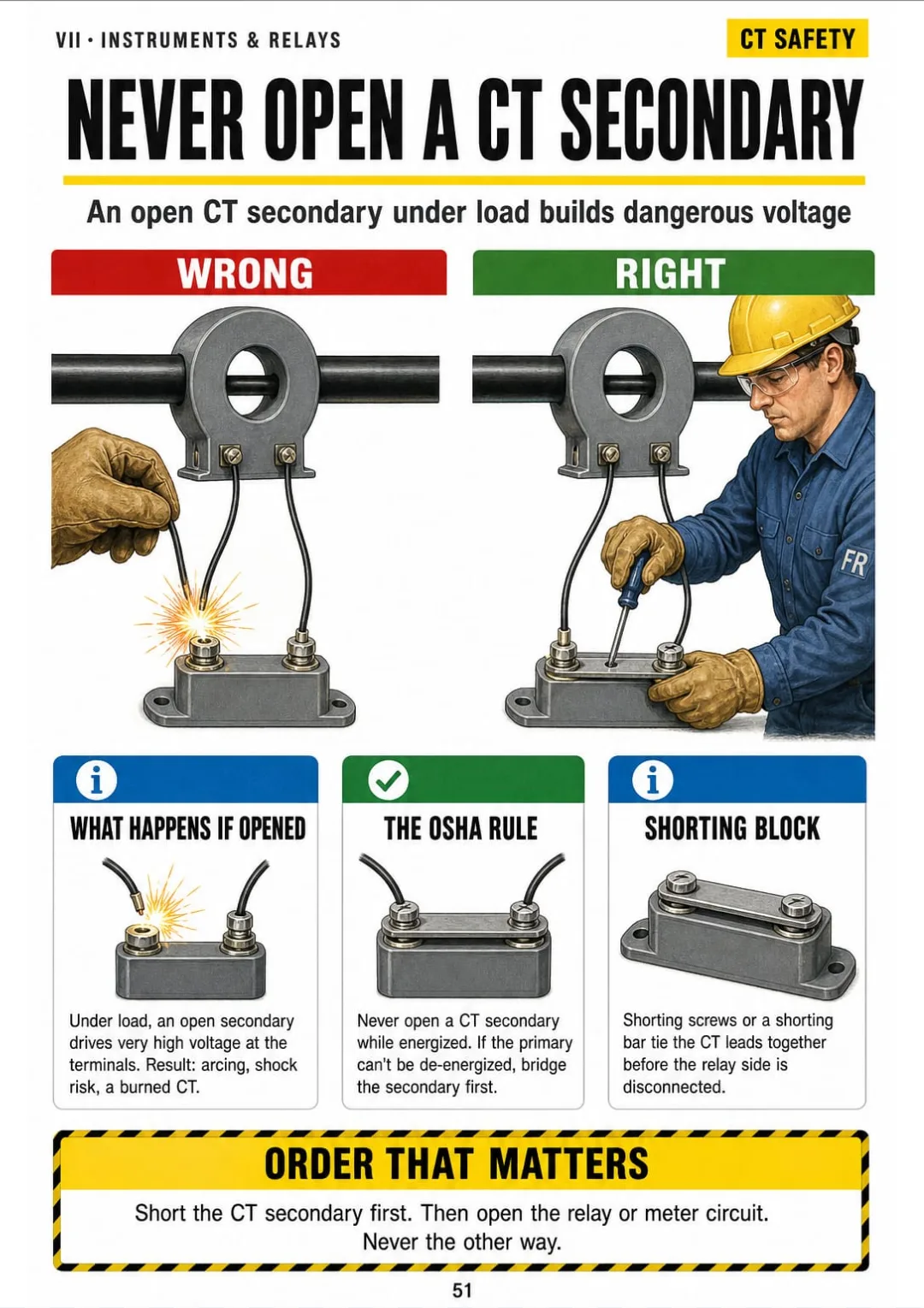
Open CT secondary under load = very high voltage: short it first (OSHA 1910.269(w)(2)).
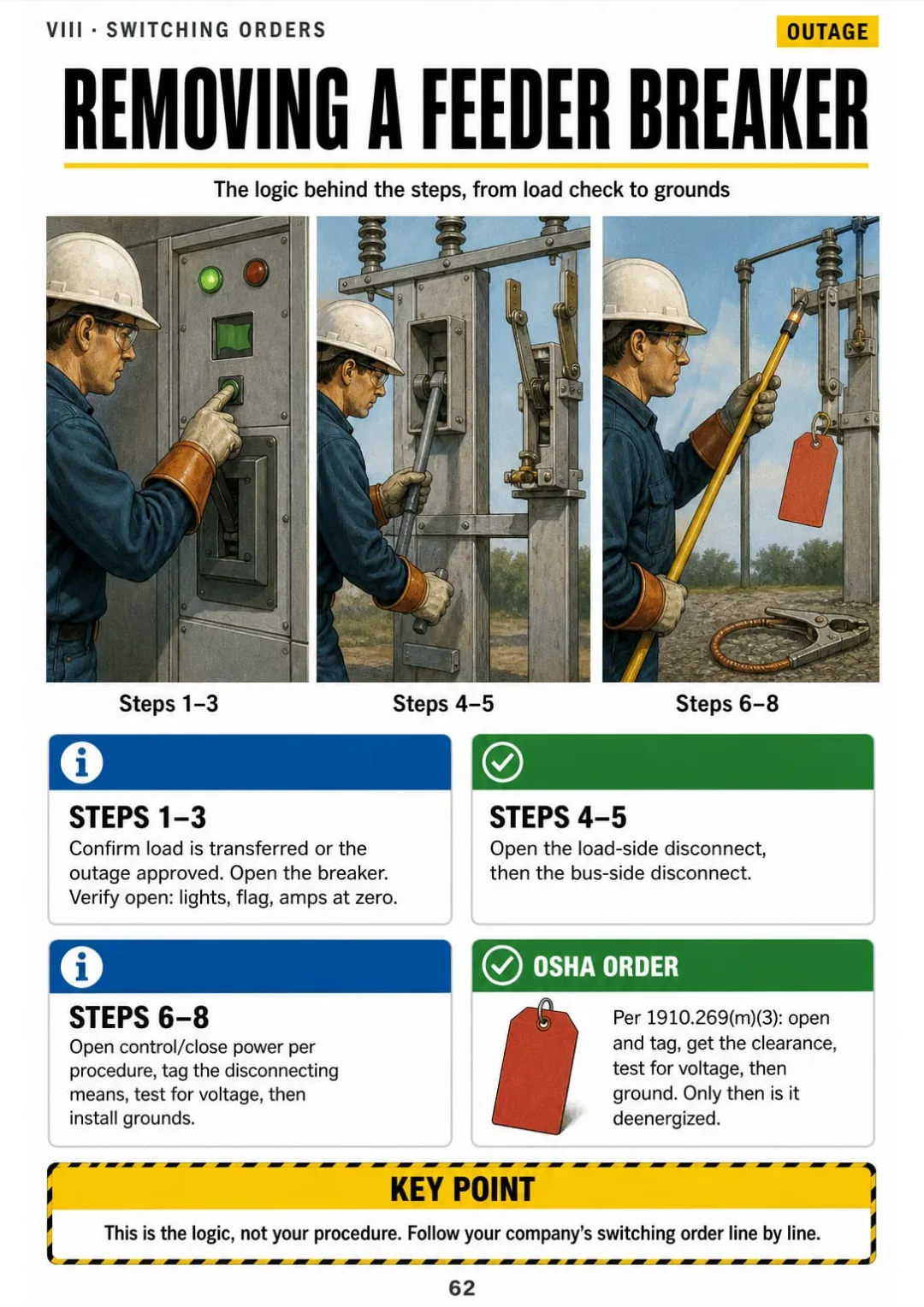
Eight steps to take a feeder breaker out: open, verify, disconnects, control power, tag, test, ground.
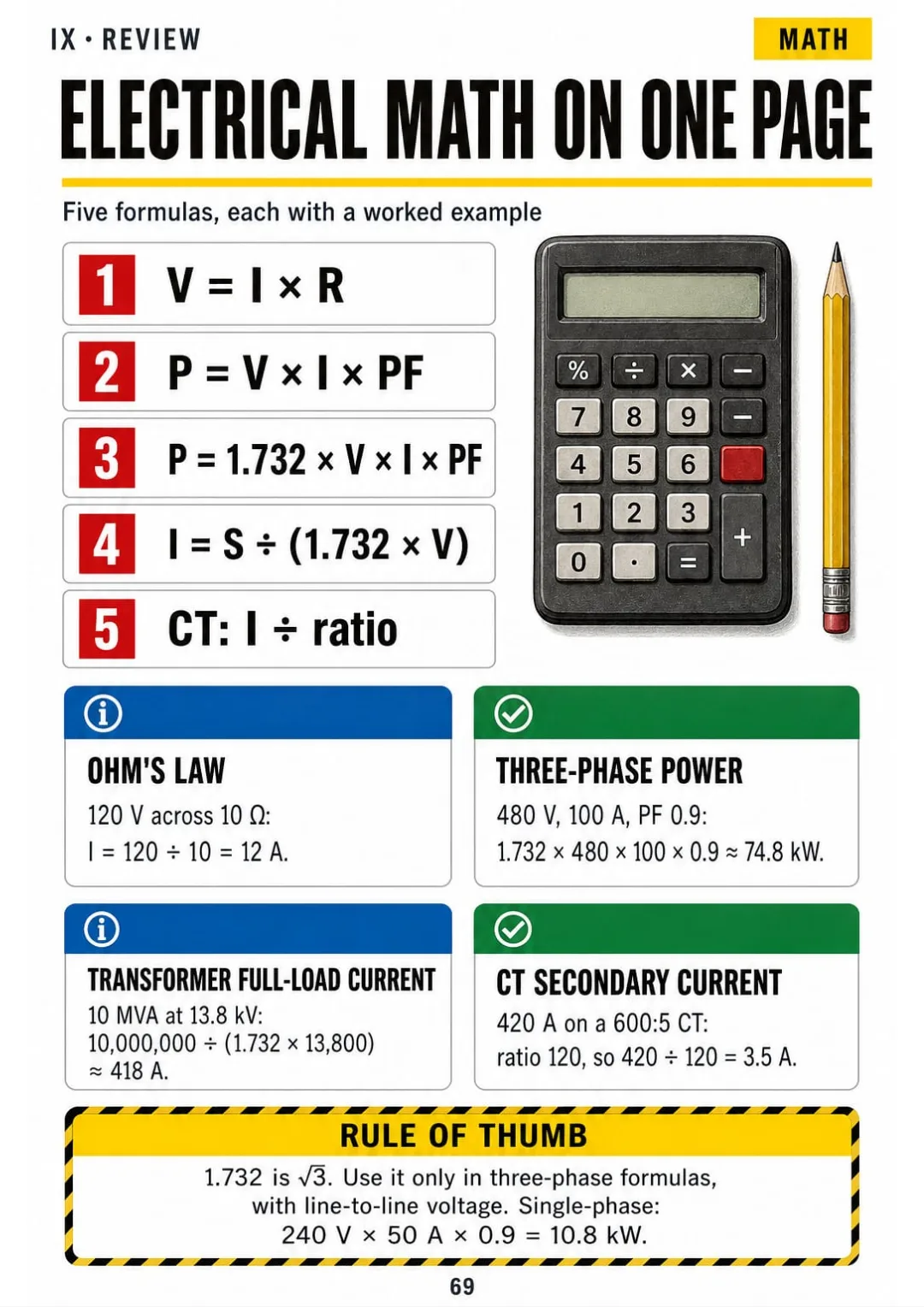
10 MVA at 13.8 kV ≈ 418 A · 420 A on a 600:5 CT = 3.5 A.
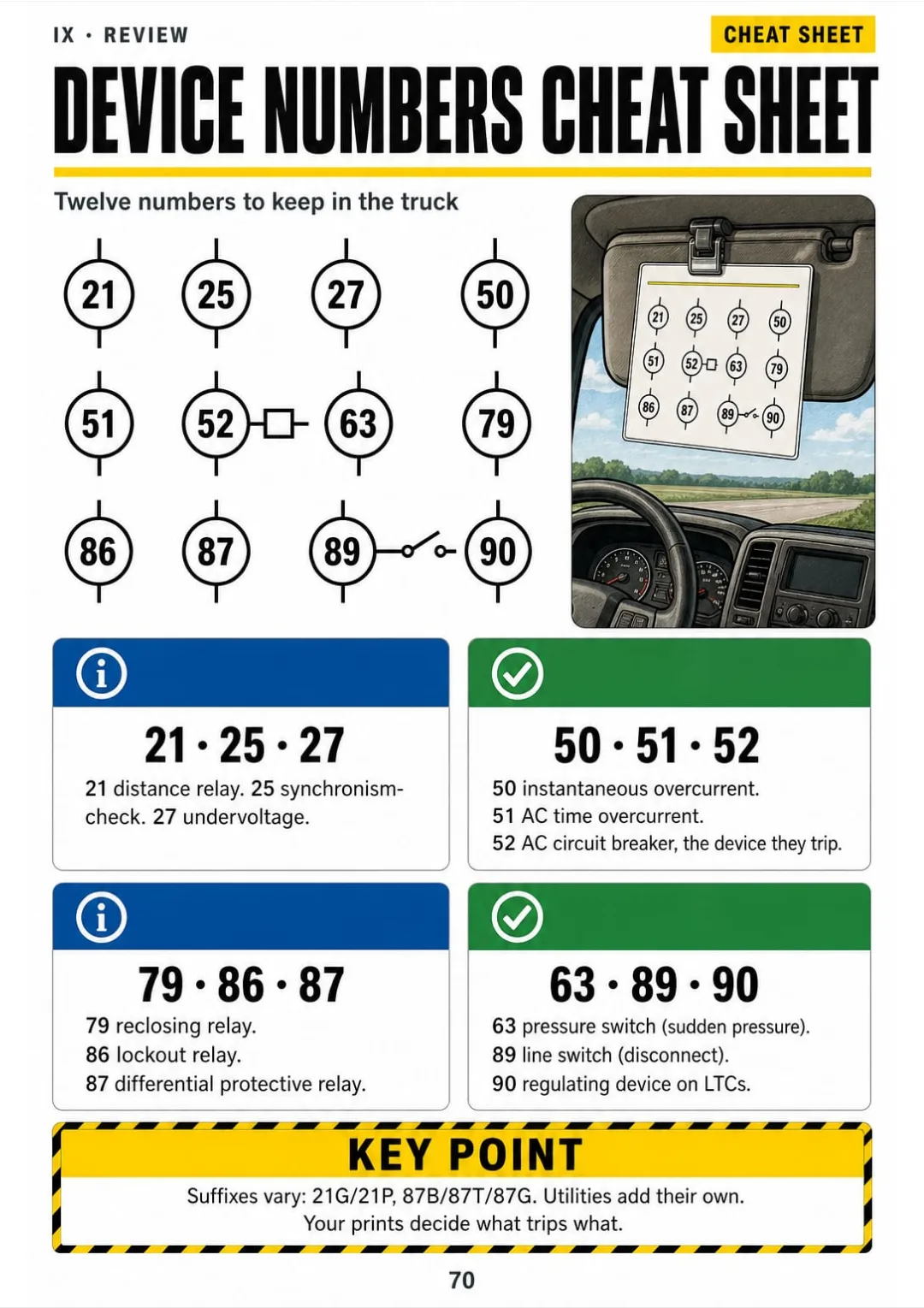
IEEE C37.2-2022: 21, 25, 27, 50, 51, 52, 63, 79, 86, 87, 89, 90.
Ieee c37.2-2022: 21, 25, 27, 50, 51, 52, 63, 79, 86, 87, 89, 90.

Swipe to see more →

These are real pages from the book. The table of contents is the full one: 9 parts and 67 topics.

The Problem Isn't You. It's How It Was Explained to You.

You're standing at the one-line on the control house wall and the journeyman asks: if this bus faults, what goes dark? You look at the breakers and can't tell a ring bus from a breaker-and-a-half.

The program manual covers bus configurations in pages of paragraphs. Single bus, main-and-transfer, ring bus, breaker-and-a-half: all described in words, never side by side. By the next morning they blur into one.

N.O. and N.C. on the one-line show normal state; tie switches stay open to keep sources apart.

In the book, all four sit on one page, drawn next to each other. Each one shows how many breakers it takes per circuit and what a single fault takes out. You compare them with your eyes, not your memory.

The same goes for the yard in one labeled drawing, the 90 control on the tap changer, the CT secondary you never open and the eight steps to take a feeder breaker out. Each one has its own page.

Next time you're at the one-line, you spot the bus layout and know what a fault takes out, without going back to the manual.

COMPARE FOR YOURSELF

The Same Topic, Two Ways to Study It

THIS
  • The manual: line after line of text
  • Yard equipment explained only with words
  • You show up to the test still unsure
A distribution substation typically receives power from one or more incoming transmission lines, which terminate on dead-end structures equipped with line disconnect switches and surge arresters. From the line terminals, conductors connect to the high-side bus through circuit breakers or circuit switchers, depending on the protection scheme. The power transformer steps the transmission voltage down to distribution level, after which the low-side bus supplies individual feeder breakers, each with associated current transformers, relaying and outgoing disconnect switches, before the circuits leave the station as overhead or underground feeders.
FOR THIS
  • The whole yard in one labeled drawing
  • The 10 stops numbered in order
  • You see it and it makes sense
Station post, suspension string and bushing: BIL, cracked skirts, flashover tracks and contamination.
CONTENTS

Take a Look at the 9 Parts and 67 Topics

Safety, the yard, reading the one-line, power transformers, tap changers, breakers and switches, instrument transformers and relays, switching orders, and inspection and test day: 72 pages, all illustrated

ISafety Before Anything Else · pp. 6-12
  1. Qualified vs. Unqualified: Who Can Do What in the Yard
  2. Minimum Approach Distance, Explained in One Drawing
  3. Arc Flash: Boundary, Incident Energy and PPE
  4. Step and Touch Potential
  5. Test Before Touch: Live–Dead–Live
  6. Protective Grounds: Ground End First, Ground End Last
  7. Clearances, Hold Orders and Tags
IIThe Substation Yard · pp. 13-20
  1. Four Kinds of Substations
  2. US Voltage Classes at a Glance
  3. The Yard in One Labeled Drawing
  4. The Control House
  5. Bus Work: Rigid Bus and Strain Bus
  6. Insulators and Bushings
  7. Lightning Protection: Arresters and Shield Wires
  8. The Ground Grid and the Fence
IIIReading the One-Line · pp. 21-28
  1. One-Line vs. Three-Line
  2. The Symbols You Must Recognize
  3. Device Numbers: The Short List
  4. Reading a One-Line Always in the Same Order
  5. Worked Example: Tracing a Feeder
  6. Normally Open, Normally Closed
  7. Bus Configurations Compared
  8. Main and Transfer Bus in Detail
IVPower Transformers · pp. 29-36
  1. How a Transformer Works in One Drawing
  2. Reading the Nameplate
  3. Delta and Wye Connections
  4. Cooling Classes: ONAN, ONAF, ONAF2
  5. Gauges on the Tank
  6. Conservator vs. Sealed Tank
  7. Transformer Protection: 87, 63, 51 and Thermal
  8. Dissolved Gas Analysis in One Page
VTap Changers and Voltage Control · pp. 37-40
  1. De-Energized Tap Changer (DETC)
  2. Load Tap Changer (LTC)
  3. The 90 Control: Bandwidth and Time Delay
  4. Step Voltage Regulators on Feeders
VIBreakers and Switches · pp. 41-49
  1. Breaker vs. Disconnect: Two Different Jobs
  2. Oil, SF6 and Vacuum Breakers Side by Side
  3. Operating Mechanisms: Spring, Pneumatic, Hydraulic
  4. SF6 Gas: Density Alarms and Handling
  5. Trip-Free and Anti-Pump
  6. Disconnect Switch Types
  7. Load Break vs. No-Load Break
  8. Reclosers and Fuses
  9. Capacitor Banks and Reactors
VIIInstrument Transformers and Relays · pp. 50-59
  1. Current Transformers: Ratio and Polarity
  2. Never Open a CT Secondary
  3. Voltage Transformers (PT/VT)
  4. Protection Zones That Overlap
  5. Overcurrent: 50 and 51
  6. Differential: 87
  7. Distance Protection: 21
  8. Reclosing 79 and Lockout 86
  9. The DC System: Batteries and Charger
  10. From Relay to Trip Coil
VIIISwitching Orders · pp. 60-66
  1. Anatomy of a Switching Order
  2. Three-Part Communication
  3. Removing a Feeder Breaker from Service
  4. Restoring to Service: The Reverse
  5. Placing a Feeder on the Transfer Bus
  6. Isolating a Transformer
  7. Verify Position Every Time
IXInspection, Review and Test Day · pp. 67-72
  1. The Yard Walk-Through
  2. Infrared Hot Spots
  3. Electrical Math on One Page
  4. Device Numbers Cheat Sheet
  5. Mistakes That Come Up Most Often
  6. Test-Day Checklist

One Page, One Topic, All Clear

Think of it this way:

Your first week on the substation crew. The foreman points at the one-line and asks you to trace a feeder from the incoming line. Everyone is waiting for you to start.

In the book, you open the yard page and it's all drawn: incoming line to outgoing feeders in 10 numbered stops, the same order you read a one-line.

Open CT secondary under load = very high voltage: short it first (OSHA 1910.269(w)(2)).

Same with the bus configurations, the load tap changer and its 90 control, CT ratio and polarity, the 50/51 and 87 relays, and removing a feeder breaker. Each one on its own page.

Substation Technician Illustrated is 9 parts and 67 topics, all drawn, and it ends with an electrical math page, a device numbers cheat sheet and a test-day checklist.

What you see drawn, you don't have to memorize.

What's Inside Substation Technician Illustrated:

Ipp. 6-12

Safety Before Anything Else

You know where you can stand in the yard and why: qualified vs. unqualified, minimum approach distance, arc flash, step and touch potential, live–dead–live, protective grounds, clearances and tags.

IIpp. 13-20

The Substation Yard

The four kinds of substations, US voltage classes, the yard in one labeled drawing, the control house, bus work, insulators and bushings, arresters and the ground grid.

IIIpp. 21-28

Reading the One-Line

You read any one-line in the same order: one-line vs. three-line, the symbols, the short list of device numbers, a traced feeder, normally open and closed, and the bus configurations side by side.

IVpp. 29-36

Power Transformers

How a transformer works, the nameplate, delta and wye, cooling classes, tank gauges, conservator vs. sealed tank, transformer protection and dissolved gas analysis.

Vpp. 37-40

Tap Changers and Voltage Control

The de-energized tap changer, the load tap changer, the 90 control with bandwidth and time delay, and step voltage regulators on feeders.

VIpp. 41-49

Breakers and Switches

Breaker vs. disconnect, oil, SF6 and vacuum side by side, operating mechanisms, SF6 alarms, trip-free and anti-pump, switch types, load break vs. no-load break, reclosers, capacitor banks.

VIIpp. 50-59

Instrument Transformers and Relays

CT ratio and polarity, why a CT secondary is never opened, PTs, overlapping zones, 50/51, 87, 21, 79 and 86, the DC system and the path from relay to trip coil.

VIIIpp. 60-66

Switching Orders

Anatomy of a switching order, three-part communication, removing and restoring a feeder breaker, the transfer bus, isolating a transformer and verifying position.

IXpp. 67-72

Inspection, Review and Test Day

The yard walk-through, infrared hot spots, electrical math on one page, the device numbers cheat sheet, the most frequent mistakes and a test-day checklist.

At the end of the book: An electrical math page, a device numbers cheat sheet, the most frequent mistakes and a test-day checklist.
Plus: 2 Free Books

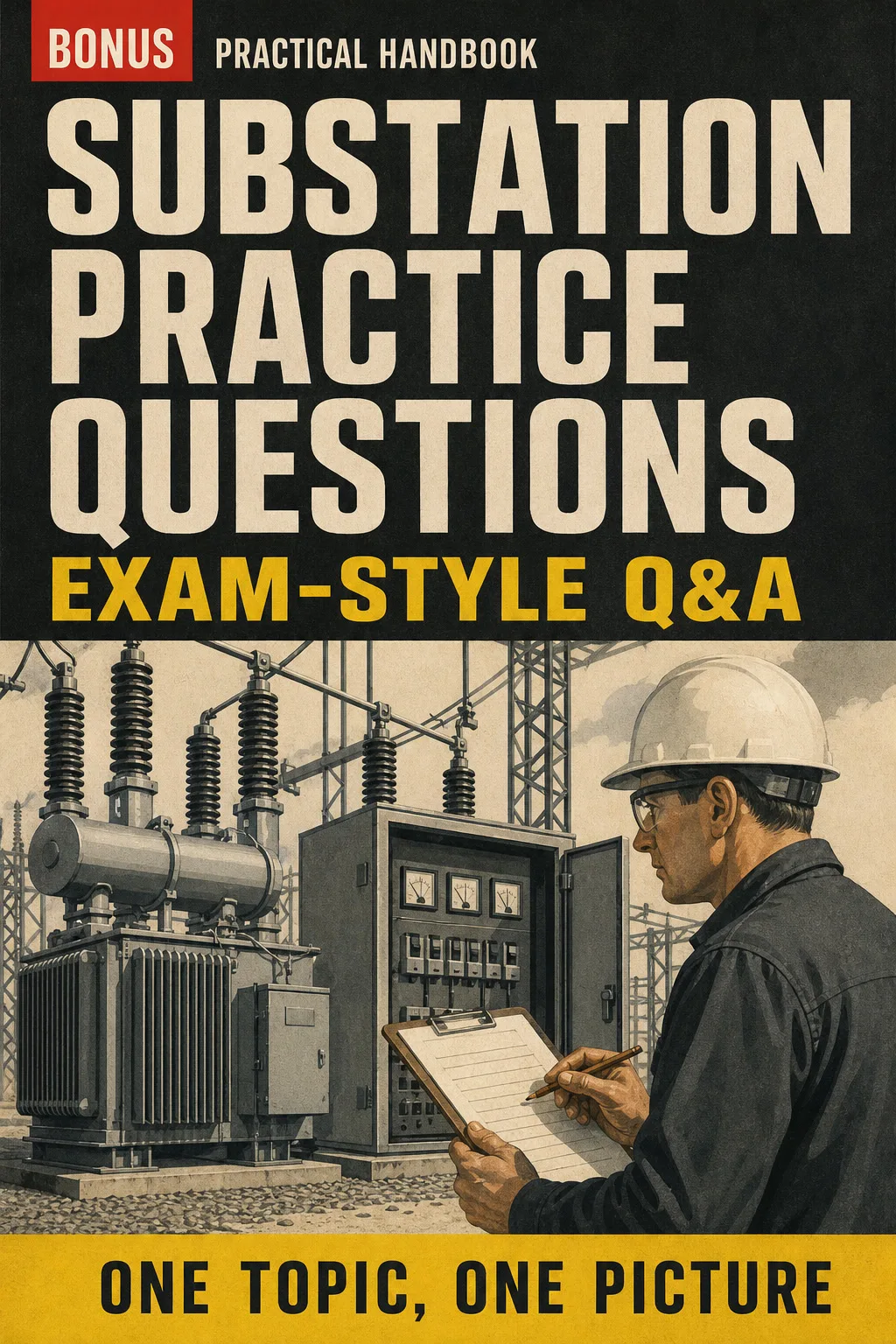
Substation Practice Questions: Exam-Style Q&A

BONUS 1: «Substation Practice Questions: Exam-Style Q&A»

Value on its own: US$ 17.90

Test yourself topic by topic with exam-style questions and a short, drawn explanation for every answer, so you find your weak spots before test day.

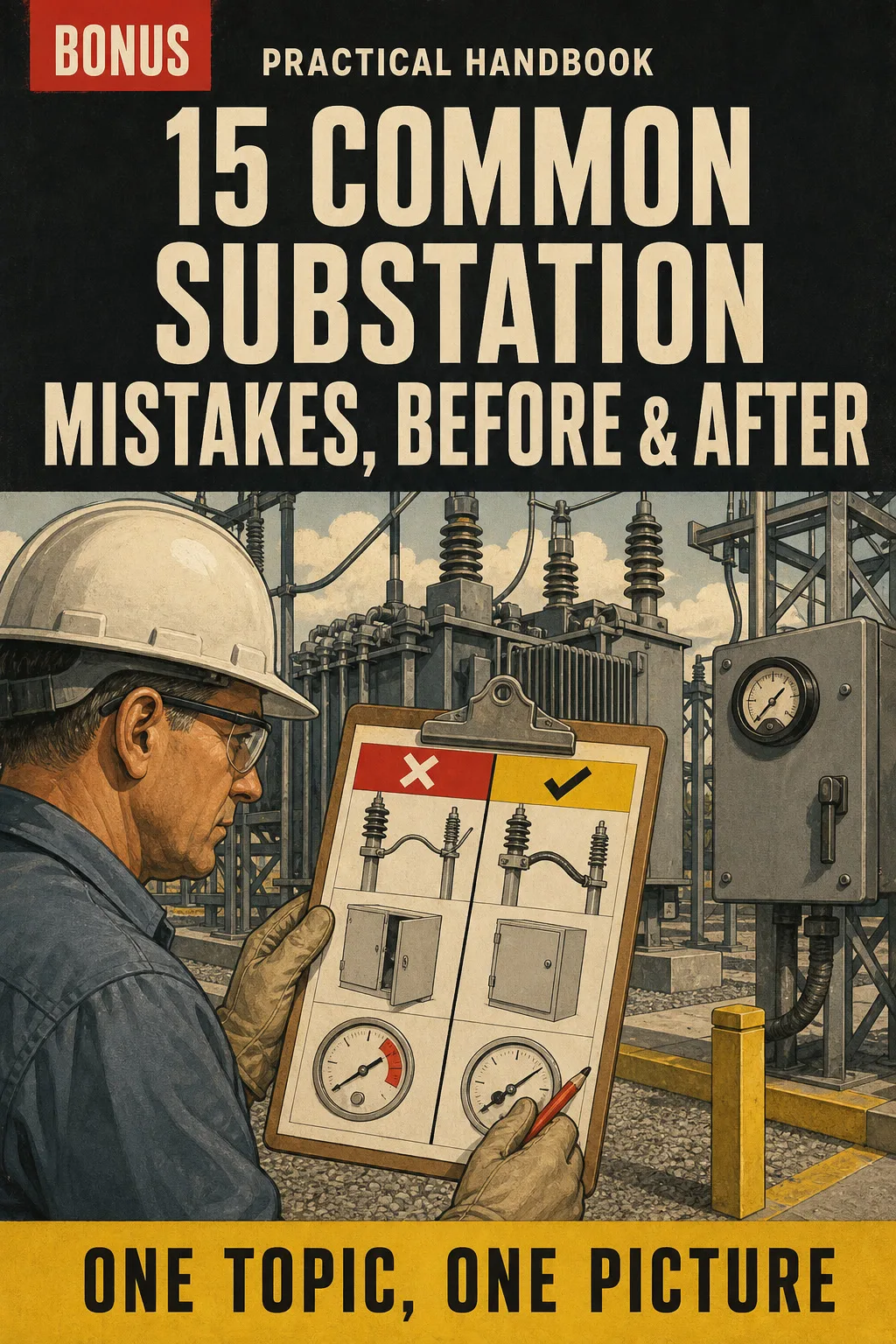
15 Common Substation Mistakes, Before & After

BONUS 2: «15 Common Substation Mistakes, Before & After»

Value on its own: US$ 14.90

See the mistakes apprentices make most often (switching out of order, mixing up CT and PT ratios, confusing load break and no-load break switches) and the right way, side by side on one page each.

Substation Technician Illustrated with 2 Free Books

  • Substation Technician Illustrated: 72 illustrated pagesUS$ 63
  • BONUS 1: Substation Practice Questions: Exam-Style Q&AUS$ 17.90
  • BONUS 2: 15 Common Substation Mistakes, Before & AfterUS$ 14.90
  • High-resolution PDF to printIncluded
Total value US$ 95.80
YOUR PRICE:
US$ 27
You save US$ 68.80
YES, I WANT SUBSTATION TECHNICIAN ILLUSTRATED FOR US$ 27

📄 This is a digital PDF book sent to your email: nothing is printed or shipped.

Secure purchaseEncrypted payment30-day guarantee

PDF by email: We email you Substation Technician Illustrated as a PDF, together with the two free books. It's a single payment: no installments, no extra charges.

Who This Book Is For

You're a substation apprentice

You're a substation apprentice

Each step of your program has its pages: the yard, the one-line, transformers and relays, drawn in the order you'll meet them.

Your step-up or journeyman test is coming

Your step-up or journeyman test is coming

You review part by part, test yourself with the practice questions and go through the mistakes book before test day.

You already work for a utility

You already work for a utility

Lineworker moving to the substation crew or plant electrician new to the yard: print the pages you need and keep them in the truck.

Everything You Get Today

US$ 95.80US$ 27
YES, I WANT SUBSTATION TECHNICIAN ILLUSTRATED FOR US$ 27

📄 This is a digital PDF book sent to your email: nothing is printed or shipped.

30DAYS
GUARANTEE

30-Day Guarantee

Try Substation Technician Illustrated for 30 days, bonus books included.

We refund everything if the file won't open, if the book isn't what you see here, if you were charged twice or if the email doesn't arrive. Just email us.

You pay once. No subscriptions.

Frequently Asked Questions

Is it for me if I'm a lineworker or utility electrician moving to substation work?

Yes. It's built for substation apprentices, lineworkers moving to the substation crew and plant electricians new to the yard. It doesn't explain what a volt is: it goes straight to what changes in a substation, from the yard and the one-line to tap changer control, CT polarity, the 50/51 and 87 relays and switching orders. Every utility and local has its own tests and procedures: the book covers the technical topics they share.

Where does the content come from?

From OSHA 29 CFR 1910.269, NFPA 70E, the National Electrical Safety Code, IEEE device function numbers and IEEE transformer standards. Every page that gives a distance, interval or value names the rule it comes from, so you can check it against the edition your employer uses. Where your utility's procedure is stricter, your procedure wins.

Is it official material?

No. It's an independent illustrated study book. It isn't issued or endorsed by any utility, union, program or standards body.

Does it replace my apprenticeship training?

No. It's study material to review and understand. Your program's training, qualified supervision and your employer's procedures always come first. Only qualified and authorized personnel work on energized equipment.

Are the practice questions the ones on the test?

No. They're exam-style questions written for this book, each with a short drawn explanation, to help you find your weak spots.

When and how do I get it?

The book and the 2 bonus books arrive as PDFs by email, to the address you enter at checkout.

Do I have to pay every month?

No. It's a one-time payment. It's a study book, so it doesn't come with a certificate and doesn't count toward your apprenticeship hours: it helps you prepare for the tests your program gives.

Can I have it on paper?

Yes. The PDF is made to print: print the whole book or just the pages you want to keep in the truck.

How does the refund work?

You have 30 days. We refund everything if the file won't open, if the book isn't what you see on this page, if you were charged twice or if the email doesn't arrive: just email us.

Before You Close This Page

No more rereading the manual with nothing sticking.

The four bus configurations, drawn side by side, and you've got it.

You walk into the test knowing where everything is.

Drawings make studying faster.

The book is right below.

One-time payment: US$ 27 · Guarantee: 30 days · PDF by email

YES, I WANT SUBSTATION TECHNICIAN ILLUSTRATED FOR US$ 27

📄 This is a digital PDF book sent to your email: nothing is printed or shipped.